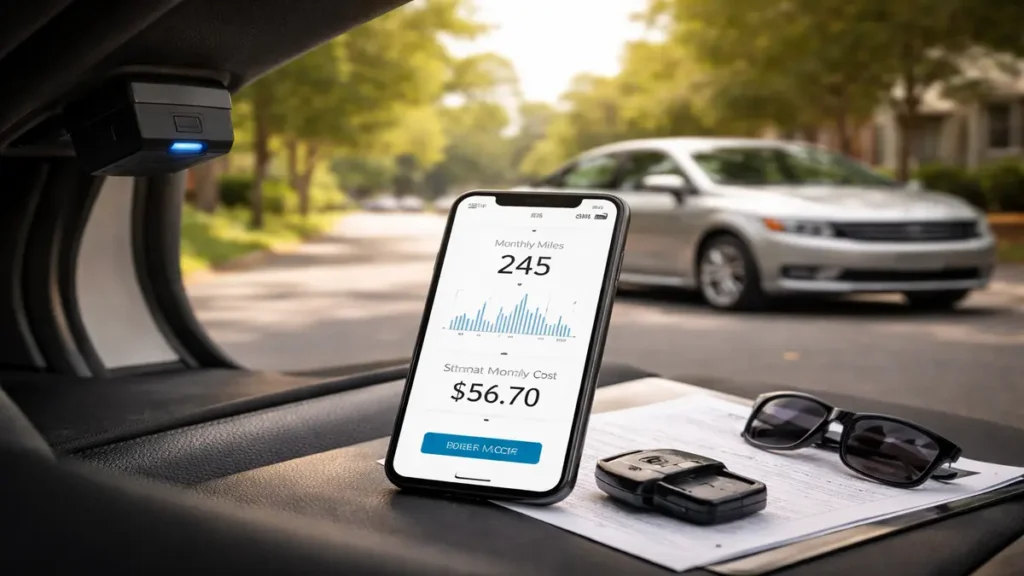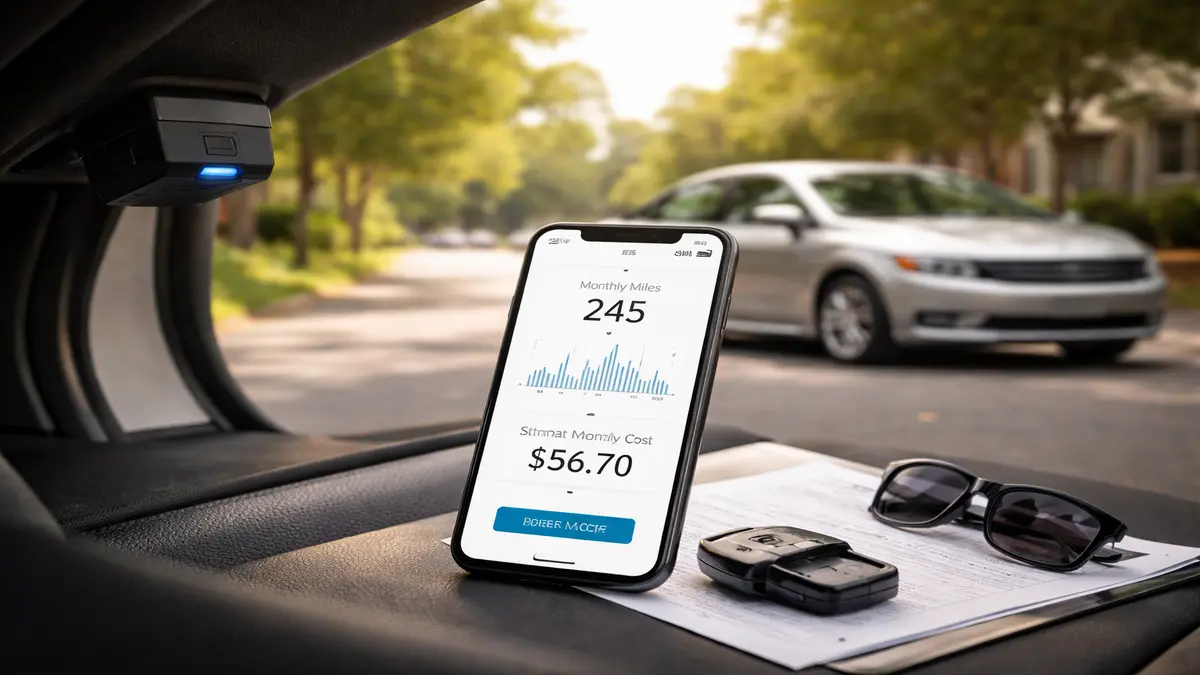
Thinking about Pay Per Mile Car Insurance USA? Learn how it works, who saves the most, real costs, top providers, comparison table, and FAQs to choose the right plan and avoid overpaying.
Introduction: Why Pay Per Mile Car Insurance USA Suddenly Feels “Normal”
A few years ago, if someone told me, “I’m paying car insurance based on how many miles I drive,” I would’ve laughed a little.
Not because it was a bad idea, but because it sounded too… neat. Like one of those things that make perfect sense on paper but don’t work in real life.
But now? Related post
Pay Per Mile Car Insurance USA is a real thing, and in many parts of the USA it’s not just “available,” it’s actually becoming a smart choice for a lot of people.
Here’s the simple truth:
Most people are overpaying for car insurance because traditional insurance assumes you’re driving a certain amount… even if your car just sits in the driveway all week.
If your driving is low (or even medium-low), pay-per-mile insurance can be a money saver. And in some cases, a big one.
But it’s not for everyone. There are catches. There are companies that market it as magical but sneak in fees. There are drivers who sign up thinking they’ll save, but end up paying more.
So this guide is meant to be that “I wish I had read this first” kind of article.
I’ll cover:
- What pay-per-mile insurance really is (without insurance jargon)
- Who it’s best for (and who should avoid it)
- How pricing actually works
- What tracking devices/apps do, and what they don’t do
- Comparison table of popular pay-per-mile options
- Real-life experience style tips and mistakes people make
- FAQs and clear answers
Let’s go deep.
What Is Pay Per Mile Car Insurance USA?
Pay-per-mile insurance is exactly what it sounds like:
You pay insurance partly based on how many miles you drive.
Instead of paying one flat monthly price no matter what, it breaks your cost into two pieces:
1) A base rate (fixed)
This covers the car even if you don’t drive at all.
Think of it like: “insurance just for existing.”
2) A per-mile rate (variable)
This part increases depending on miles driven.
So your monthly bill changes based on usage.
Why This Pricing Model Exists
Insurance companies basically bet on risk.
If you drive more miles, you’re more likely to:
- get into an accident
- get hit by someone else
- have damage from road hazards
- face theft risk while parked in public areas
- rack up claims over time
So miles are closely tied to risk.
Traditional insurance doesn’t measure your miles directly. It estimates it based on what you tell them (or what they assume).
Pay-per-mile flips that.
Less driving = less risk = less cost.
Simple idea. Powerful.
How Pay Per Mile Car Insurance USA Actually Works (In Real Life)
Here’s how it works in practical terms:
- You sign up for a pay-per-mile policy.
- The company tracks your miles using:
- a plug-in device (OBD-II)
- a phone app
- or sometimes a photo of odometer (rare)
- a plug-in device (OBD-II)
- Your bill comes:
- base + miles x per-mile rate
- base + miles x per-mile rate
- If you drive a lot that month, you pay more.
- If you barely drive, you pay less.
The part people misunderstand:
Pay-per-mile insurance is not always cheaper.
It depends on:
- your base rate
- your mileage
- your driving profile (age, location, record)
- your coverage level
- how the company structures fees
You can still get ripped off if you don’t compare properly.
Who Should Consider Pay Per Mile Car Insurance USA?
This model is perfect for certain types of drivers.
Let’s list them in a realistic way.
1) Work-from-home people
If your commute died during remote work, you may still be paying “commuter insurance prices.”
Pay-per-mile often makes sense here.
2) Low-mileage drivers (under 7,000–8,000 miles/year)
This is the sweet spot.
Many people drive less than they think. Seriously.
Some folks assume they drive 12k/year but actually drive 5k.
3) People with a second car
Maybe one car is the main one and the other is for backup.
Why pay full insurance pricing for a car that’s barely moving?
4) Retired drivers
Many retirees drive:
- groceries
- doctor visits
- short trips
Pay-per-mile can fit really well.
5) Students with a car
Some students drive very little—mostly weekends or breaks.
6) City dwellers
If you live in:
- NYC
- Chicago
- Boston
- San Francisco
- Seattle
You may drive far less than suburban drivers.
Who Should Avoid Pay Per Mile Car Insurance USA?
Now let’s be honest. Some people should NOT pick this.
1) Long commuters
If you drive 40–70 miles a day, you’ll probably pay more.
2) Delivery drivers / rideshare drivers
Uber, Lyft, DoorDash, Instacart… lots of miles.
Pay-per-mile is basically your enemy here.
(Also, some pay-per-mile policies may not cover commercial use.)
3) Road trip people
If you’re that person who randomly drives to another state for fun… that mileage adds up fast.
4) People who hate tracking devices/apps
Some people just don’t want it.
And honestly, that’s a valid preference.
5) People who want predictable monthly bills
Pay-per-mile changes monthly. It’s not huge swings usually, but still.
If you like fixed budgeting, you might hate variable pricing.
The Real Math: How Your Monthly Cost Is Calculated
Let’s make this super clear.
Basic formula:
Monthly Cost = Base Rate + (Miles Driven × Per-Mile Rate)
Example:
- Base rate: $40/month
- Per-mile: $0.06
- Miles driven: 500 miles
Monthly cost:
= 40 + (500 × 0.06)
= 40 + 30
= $70/month
Now if next month you only drive 150 miles:
= 40 + (150 × 0.06)
= 40 + 9
= $49/month
That’s where the savings show up.
How Much Can You Save With Pay Per Mile Car Insurance USA?
This depends heavily on your current premium.
But generally, low-mileage drivers can save anywhere from:
- 10%
- to 30%
- sometimes 40%+
The biggest savings usually happen when:
- you’re currently paying a high monthly premium
- but you drive very little
Example:
Someone paying $180/month but only driving 300 miles/month could see major reductions.
What Pay Per Mile Car Insurance USA Tracks (And What It Doesn’t)
This is where people get nervous.
Important:
Pay-per-mile is NOT the same as “driving behavior” insurance in every case.
Some companies track only:
- mileage
- time of day
- basic trip data
Others may track:
- hard braking
- acceleration
- speed patterns
- cornering
- phone distraction
It depends on the company.
You must check:
Is it mileage-only?
Or mileage + behavior?
Because the pricing and privacy feel very different.
Device Types: OBD Plug-In vs Phone App
Option A: OBD-II Plug-In Device
This plugs into a port under your dashboard.
Pros:
- accurate mileage
- doesn’t rely on phone battery
- generally stable
Cons:
- some cars have port access issues
- some people hate “something plugged in”
- may track more than mileage
Option B: Phone App Tracking
Pros:
- no device needed
- easy setup
- flexible
Cons:
- can misread trips
- drains battery sometimes
- may confuse you as passenger vs driver
My personal opinion?
OBD devices are usually more accurate.
Apps can be slightly annoying.
Pay Per Mile Car Insurance USA vs Usage-Based Insurance (They’re NOT the Same)
This confusion is common.
Pay Per Mile Car Insurance USA:
You pay based on miles.
Usage-Based Insurance (UBI):
You pay based on:
- mileage
- AND driving behavior (how you drive)
UBI is like:
“Good driving discount program”
Pay Per Mile Car Insurance USA is like:
“Low mileage discount program”
Some companies combine both.
Coverage: Do Pay Per Mile Car Insurance USA Policies Provide Full Coverage?
Yes, many do.
You can usually get:
- liability
- collision
- comprehensive
- uninsured motorist
- medical payments / PIP
- roadside assistance
- rental coverage
It’s not some “basic cheap policy.”
It’s a pricing model, not a coverage downgrade.
Comparison Table: Popular Pay Per Mile Car Insurance USA Options in the USA
Below is a detailed comparison table (not marketing fluff).
Note: Availability depends on state. These programs change over time.
| Company / Program | Type | Tracking Method | Best For | Key Strength | Possible Downsides |
| Metromile | Pay-per-mile | OBD device | city + low mileage | true mile pricing | not available in all states |
| Allstate Milewise | Pay-per-mile | device/app depending state | low-mileage Allstate customers | strong company backing | can be pricey base rate |
| Nationwide SmartMiles | mileage-based discount model | device/app | people who drive less but want standard insurance | discount potential | not pure per-mile pricing |
| State Farm Drive Safe & Save | UBI discount | app/device | safe drivers | discount + large network | not per-mile billing |
| Progressive Snapshot | UBI discount | app/device | good drivers | strong discounts possible | driving behavior matters |
| Root | app-based pricing model | phone app | young safe drivers | can be low-priced | rates can swing, strict scoring |
| Mile Auto (in some states) | pay-per-mile style | odometer photo | people who hate device tracking | privacy-friendly | limited availability |
| Liberty Mutual RightTrack | discount program | app | safe drivers | discount | not truly pay-per-mile |
If your goal is true pay-per-mile billing, Metromile and Milewise are closest to that model.
If your goal is a discount for low driving, SmartMiles and others may work too.
Real Experience: What It Feels Like Using Pay Per Mile Car Insurance USA
Let me share a realistic “this is how it goes” experience.
Week 1:
You install the device/app.
You check miles too often.
You become weirdly aware of driving.
At first you’re like:
“Wait… that trip was 12 miles? I thought it was 4.”
Week 2:
You start doing small planning:
- combine errands
- avoid pointless trips
- carpool sometimes
Not because you’re cheap.
Just because it feels stupid to drive separately.
Month 1 bill:
This is the moment you find out if pay-per-mile is for you.
If your bill is much lower than expected, you’ll love it.
If your base rate is high and you drove more than you thought, you’ll feel disappointed.
By month 3:
You stop thinking about it.
It becomes normal.
But you do become more mileage-aware long-term.
Common Mistakes People Make (And How to Avoid Them)
Mistake #1: Not calculating yearly miles first
Before signing up, estimate your annual miles properly.
Do this:
- Check last oil change sticker
- Look at Carfax records if available
- Take your odometer now
- Compare to last year’s registration / maintenance note
If your annual miles are above ~10k–12k, pay-per-mile is often not worth it.
Mistake #2: Ignoring base rate
Some companies advertise:
“$0.05 per mile!”
but the base is $90/month.
That’s not cheap.
Mistake #3: Choosing too much coverage without realizing costs
Pay Per Mile Car Insurance USA doesn’t mean everything becomes cheaper.
Collision and comprehensive are still priced by:
- car value
- risk
- claims history
So don’t assume pay-per-mile = miracle.
Mistake #4: Not checking state availability
Some programs are not in every state.
Mistake #5: Thinking it’s only for “safe drivers”
Mileage and behavior are different things.
You can be an average driver and still save if you drive very little.
Pay Per Mile Car Insurance USA and Privacy: Should You Worry?
Let’s talk honestly.
Insurance companies already know a lot:
- your location (zip code)
- driving record
- vehicle info
- claims
- credit-based insurance score (in many states)
Pay-per-mile adds:
- mileage data
- trip patterns (sometimes)
That said, some programs are mileage-only.
If you’re privacy sensitive, look for options like:
- odometer photo verification models (where available)
Before signing:
Read what data they collect.
Not the marketing FAQ. The privacy policy section.
Does Pay Per Mile Car Insurance USA Affect Claims?
No, claims work the same.
Accident happens → you file claim → deductible applies.
However, tracking data could play a role if:
- there is dispute about where/when accident happened
- fraud investigation occurs
That’s rare for normal people.
But it’s worth knowing.
How Pay Per Mile Car Insurance USA Handles “Parked Car Risk”
Even if your car never moves, it can still be:
- stolen
- hit while parked
- vandalized
- damaged by weather
That’s why the base rate exists.
If you want maximum savings and barely drive, you can also consider:
storage insurance or parked car coverage (if available).
What About Rental Cars?
Pay Per Mile Car Insurance USA doesn’t affect rental insurance.
Your policy may extend to rentals (depends on insurer and policy type).
But pay-per-mile tracking usually only applies to your insured car.
Who Saves the Most? (Profiles)
Profile A: Remote worker, suburban
Miles: 3,000–5,000/year
Savings: often high
Profile B: City resident with public transport
Miles: 1,500–3,500/year
Savings: very high potential
Profile C: Retired driver
Miles: 2,000–6,000/year
Savings: strong
Profile D: Long commute driver
Miles: 12,000–20,000/year
Savings: usually none
Profile E: Part-time driver, second vehicle
Miles: 2,000–4,000/year
Savings: strong
How to Decide If It’s Worth It (Simple Checklist)
Here’s the checklist I personally would follow:
Step 1: Estimate yearly mileage
- under 7k → strong candidate
- 7k–10k → compare carefully
- above 10k → likely not worth it
Step 2: Compare base rate
If the base rate is too high, savings disappear.
Step 3: Confirm coverage
Same liability limits, same deductibles.
Step 4: Fees
Check:
- device fees
- installation fees
- cancellation fees
Step 5: State availability
A lot of disappointment starts here.
Cost Example Comparison (Traditional vs Pay Per Mile Car Insurance USA)
Let’s make it very real.
Person 1: Drives 4,000 miles/year
Traditional policy: $130/month → $1,560/year
Pay-per-mile:
- Base: $45/month → $540/year
- Per mile: $0.07 × 4,000 = $280/year
Total = $820/year
Savings = $740/year
That’s real money.
Person 2: Drives 14,000 miles/year
Traditional: $130/month → $1,560/year
Pay-per-mile:
- Base: $45/month → $540/year
- Per mile: $0.07 × 14,000 = $980/year
Total = $1,520/year
Savings: $40/year (basically nothing)
And if the base rate was higher, it could cost more.
What Happens If You Have a High-Risk Profile?
If you’re:
- young driver
- accident history
- tickets
- high theft area
The base rate can be high.
Sometimes so high that Pay Per Mile Car Insurance USA doesn’t help much.
But it’s still worth quoting.
Because each company prices differently.
Tips to Get the Cheapest Pay Per Mile Car Insurance USA Rate
This is the practical part.
1) Increase deductibles slightly
If you can handle it financially.
2) Don’t underinsure liability
Cheap insurance becomes expensive after one accident.
3) Bundle with renters/home
Sometimes bundling gives the biggest discount.
4) Keep mileage low consistently
Sounds obvious, but some drivers go wild after they see low bills and ruin it.
5) Maintain a good driving record
Even pay-per-mile has base risk pricing.
Related post
- Health Insurance in the USA 2026
- Car insurance in the USA — What It Covers, How Much It Costs, and How to Choose…
- Home Insurance in the USA — Coverage, Benefits, Costs & Complete Guide for Homeowners
- Pet insurance in the USA — Complete Guide for Pet Owners
- Health insurance in the United States
FAQs: Pay Per Mile Car Insurance USA
Q1: Is Pay Per Mile Car Insurance USA legit?
Yes. It’s a real insurance policy with real coverage, just priced differently.
Q2: Can I get full coverage with it?
Yes, many insurers offer full coverage (collision + comprehensive).
Q3: Does it track my speed?
Depends on the company. Some track only miles, some track driving behavior.
Q4: Is it cheaper than regular insurance?
If you drive low miles, usually yes.
If you drive a lot, usually no.
Q5: What if I forget my phone (app-based tracking)?
Some apps can estimate and correct. But errors happen.
OBD devices usually avoid this issue.
Q6: Can the tracking device drain my battery?
Rare, but possible in older cars.
Most devices are designed to be low power.
Q7: Can I remove the device anytime?
Usually yes, but it may cancel the mileage tracking and affect billing.
Q8: What happens if I take a long road trip?
You’ll pay more that month.
But if you only do one long trip a year, it might still be worth it.
Q9: Does weather or parking risk count?
That’s part of the base rate.
Q10: Does it affect my credit score?
No. But insurers may use credit-based insurance scoring depending on state laws.
Q11: Is it available in every state?
No. Availability is state-by-state.
Q12: Is it good for teens?
Sometimes, but teen base rates can be high.
It may still help if the teen drives very little.
Q13: Can I switch back to normal insurance later?
Yes, usually anytime.
Q14: Are there mileage caps?
Some programs have maximum monthly mileage pricing, others don’t.
Read terms carefully.
Q15: Can I cheat mileage?
Not worth it. Fraud issues can lead to cancellation or claim denial.
Final Thoughts: Is Pay Per Mile Car Insurance USA Worth It?
If you ask me in one sentence:
Pay Per Mile Car Insurance USA is worth it when you truly drive less than average—and when the base rate isn’t overpriced.
It’s not magic.
It’s not a gimmick either.
It’s basically insurance catching up with the reality that:
not all drivers use their cars the same.
And if your car spends more time parked than moving, why pay like you’re driving daily?
That’s the whole point.