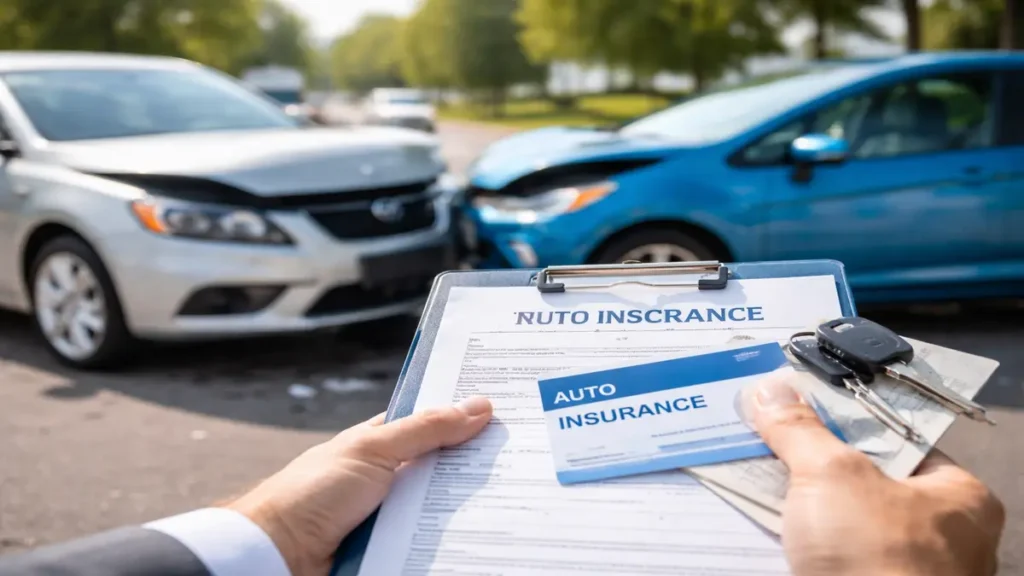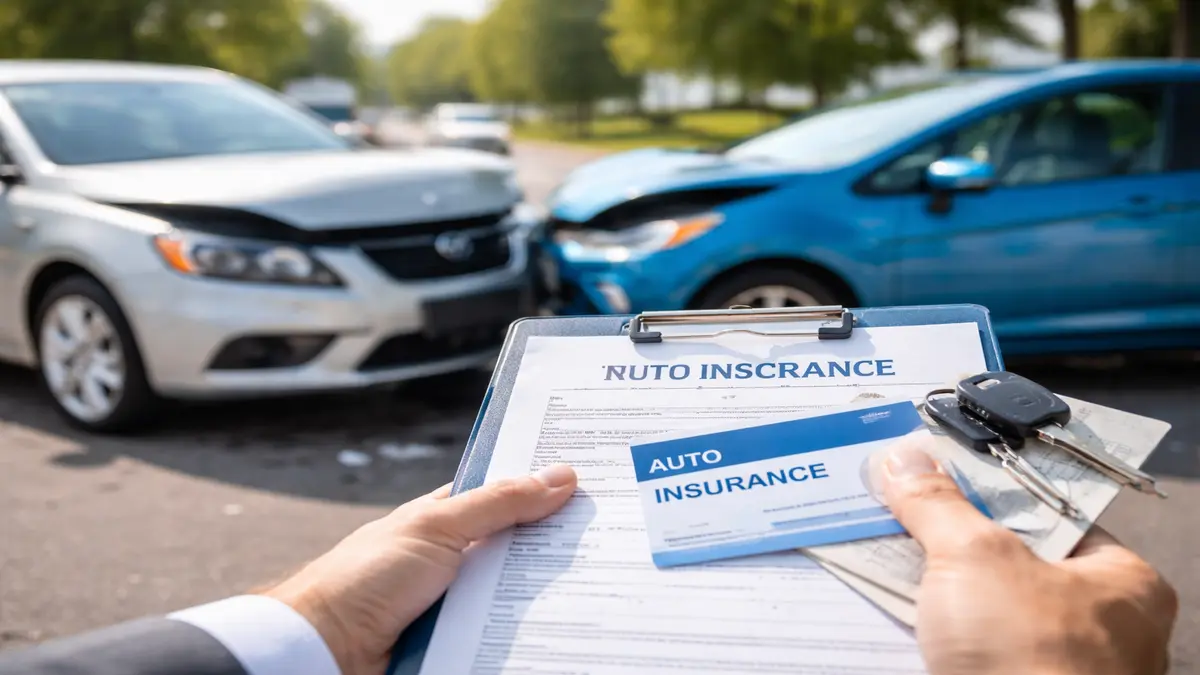
Confused about liability car insurance in the USA? This 2026 guide explains what it covers, how much it costs, minimum vs higher limits, comparison table, and how to choose the right protection.
If you drive in the USA—even if it’s just “office to home” driving—there’s one kind of car insurance you can’t ignore: liability Car Insurance in the USA .
Not because people love insurance.
Most people don’t.
But because in the USA, one small mistake on the road can turn into a big legal and financial mess. The scary part is, it doesn’t even have to be a major accident. Sometimes it’s a minor crash… but the medical bill, repair bill, and lawsuit risk can become much bigger than the crash itself.
That’s why liability Car Insurance in the USA exists.
And if you’re here because you searched “Car Insurance in the USA ,” chances are you want clear answers:
- What does liability insurance cover?
- How much liability car insurance do I need?
- What are the minimum limits by state?
- Is minimum liability enough or risky?
- How much does it cost in 2026?
- What happens if I don’t have it?
So friend, let’s break it down properly—like a human would explain it—not like an insurance company brochure.
What Is Liability Car Insurance in the USA?
Liability Car Insurance in the USA is the part of auto insurance that pays for the damage you cause to other people when you’re at fault in an accident.
It generally covers two things:
- Bodily Injury Liability (BI)
Pays for injuries to other people (driver/passengers/pedestrians). - Property Damage Liability (PD)
Pays for damage to other people’s property (their car, fence, building, etc.).
Important:
Liability insurance usually does not cover your own car.
It’s for the harm you cause to others.
That’s why it’s called “liability”—you’re legally responsible.
Why Liability Car Insurance in the USA Is Mandatory (and Why the USA Is Different)
In many countries, if you crash, you pay some damage, maybe a police fine, then the case closed.
In the USA? Not always.
Here’s why it feels different:
- Medical treatment costs are extremely high
- People often hire lawyers quickly
- Lawsuits are common, especially in injury cases
- Even a simple accident can lead to multiple claims
So most states require drivers to carry minimum liability insurance before driving legally.
And trust me—if you think “I drive carefully, I don’t need much coverage,” the road has a funny way of testing confidence.
What Liability Car Insurance in the USA Covers (In Real Life)
Let’s say you accidentally rear-end a car at a red light.
Liability Car Insurance in the USA may cover:
- The other driver’s medical expenses
- Their lost wages (if they miss work)
- Pain and suffering settlement (depends on claim)
- Repairs for the other vehicle
- Damages to other property (guardrails, poles, fences)
Liability Car Insurance in the USA does NOT cover:
- Repairs to your own car
- Your own injuries
- Theft, fire, flood damage to your car
- Damage from hitting animals (usually comp coverage)
So liability Car Insurance in the USA is basically:
“I’m at fault → I pay for the other person.”
Liability Car Insurance in the USA Limits Explained (The 25/50/25 Type Confusion)
You’ve probably seen numbers like:
25/50/25
50/100/50
100/300/100
These are liability Car Insurance in the USA limits.
Here’s what they mean:
Take 25/50/25:
- $25,000 Bodily Injury per person
- $50,000 Bodily Injury per accident
- $25,000 Property Damage per accident
So if you hurt one person, max BI payout for that person is $25k.
If you hurt multiple people, the max combined payout is $50k.
And PD covers property damage up to $25k.
Now pause and think:
In the USA, a single ER visit can hit $10k–$20k quickly.
A surgery can be $50k+.
A hospital stay can be $100k+.
So… minimum limits can get eaten fast.
Bodily Injury vs Property Damage: Which Is More Dangerous?
This is important.
Property Damage (PD)
Typically easier to estimate and negotiate.
Car repairs might be $3k–$15k depending on the vehicle.
But if you hit a luxury car or crash into property, PD can jump.
Example:
- Tesla repair: can be expensive
- Hitting a building: very expensive
- Hitting multiple cars: high
Bodily Injury (BI)
This is the real danger zone.
Because injuries aren’t fixed numbers.
They come with medical bills, rehab bills, missed work, and legal claims.
Even “minor back pain” can become a big claim in the USA.
So if you’re increasing coverage, focus on BI limits first.
Minimum Liability Car Insurance in the USA : Is It Enough?
This is one of the most common questions.
Technically, minimum liability Car Insurance in the USA is enough to drive legally.
But is it enough to protect you financially? Often… no.
Why minimum can be risky:
Let’s say your state minimum is 25/50/25.
You cause an accident and the other driver needs surgery + rehab.
Medical bill = $80,000
Your BI per person limit = $25,000
Insurance pays $25k
Remaining $55k? The injured person may come after you.
That’s the part people don’t understand.
If you don’t have enough liability coverage, the other party can:
- sue you
- go after wages (garnishment)
- target savings
- in serious cases, put financial pressure for years
So minimum is legal compliance, not strong protection.
How Much Liability Car Insurance in the USA Should You Carry?
If you ask normal drivers what they carry, you’ll see many choose:
- 50/100/50
- 100/300/100
- 250/500/250 (for higher-income/high-asset drivers)
Practical “Human” Recommendation:
- If you’re young with few assets → 50/100/50
- Average working professional → 100/300/100
- Homeowner / family / good savings → 250/500/250
- If you have significant assets → add an umbrella policy too
Simple rule:
The more you have to lose, the more you need to cover.
What Happens If You Drive Without Liability Car Insurance in the USA ?
Driving without liability insurance in most states can lead to:
- fines
- license suspension
- vehicle registration suspension
- impound fees
- SR-22 requirement (high-risk insurance proof)
- higher insurance premiums later
- personal liability for damages
And if you cause injury without insurance?
You can end up paying out-of-pocket for years.
So skipping insurance is not “saving money.”
It’s like playing financial roulette.
Liability Car Insurance in the USA vs Full Coverage: What’s the Difference?
People often say:
“I have full coverage.”
But what does that mean?
Liability Only
Covers damage you cause to others.
Full Coverage (common meaning)
Usually means:
- Liability
- Collision (covers your car in accidents)
- Comprehensive (theft, fire, storm, etc.)
So liability is a basic requirement. Full coverage is broader protection.
Liability Car Insurance Cost in USA (2026)
Costs depend on:
- state
- driving history
- age
- vehicle type
- ZIP code
- credit score (in many states)
- coverage limits
But here are realistic ranges:
Average monthly cost for Liability Only:
- Good driver: $40–$90/month
- Younger driver: $90–$220/month
- After ticket/accident: $130–$350/month
Average yearly cost:
- $480–$1,200 for many drivers
- More in high-cost states/cities
Now here’s the thing: increasing your liability limits often doesn’t increase the premium that much compared to the extra protection you get.
Sometimes upgrading from minimum limits to 100/300/100 costs just $10–$30 extra monthly.
And that extra $10–$30 can save you from a lawsuit nightmare.
What Affects Your Liability Car Insurance in the USA Price the Most?
1) Driving record
Tickets + accidents = biggest premium killer.
2) Age & driving experience
Young drivers pay more.
3) Location
Busy cities have higher accident rates.
4) Coverage limit
Higher limits cost more, but not always dramatically more.
5) Credit score (in many states)
A better score often means lower premium.
6) Vehicle type
Not huge for liability-only, but still affects risk profile.
Liability Car Insurance in the USA Add-ons That Matter (Not Optional for Many)
Uninsured/Underinsured Motorist (UM/UIM)
This covers you if someone hits you and they have no insurance or low insurance.
In some states it’s required.
Honestly, in real life this is underrated. Because many drivers carry minimum limits or none at all.
Medical Payments (MedPay) / PIP
Covers medical expenses for you and passengers.
PIP is common in no-fault states.
“No-Fault States” and Liability Car Insurance in the USA (Quick Clarity)
Some states use no-fault insurance systems (like Florida, Michigan, etc.)
In no-fault:
- your insurance pays your injuries first (PIP)
- lawsuits are limited unless injuries are severe
- but liability is still important
Even in no-fault states, property damage liability and BI coverage still matter.
Comparison Table: Liability Car Insurance in the USA Limits (What You Pay vs What You Risk)
Here’s a comparison table that makes the decision clearer.
| Liability Limit | Who It Suits | Protection Level | Risk If Crash Happens |
| State Minimum (e.g., 25/50/25) | Very tight budget | Low | High lawsuit risk |
| 50/100/50 | New drivers, low assets | Medium | Moderate risk |
| 100/300/100 | Most working drivers | Strong | Low risk |
| 250/500/250 | Families, homeowners | Very strong | Very low risk |
| 250/500/250 + Umbrella | High net worth | Best protection | Minimum risk |
Real-Life Experience (Short, Realistic)
I’ll share something that happens more than people realize.
A guy I know (regular office worker, nothing fancy) had minimum liability coverage. One day he slightly misjudged a left turn and hit a motorcycle.
The rider survived, thankfully. But had a broken leg.
Medical claims ended up close to $90,000 (hospital, surgery, therapy, time off work). His insurance limit per person was $25,000.
Insurance paid $25k.
Then the injured rider’s legal team went after him for the remaining amount. They negotiated a settlement, but he still paid thousands out of pocket and faced stress for months.
After that, his first sentence was:
“Bro, minimum insurance is not insurance. It’s a formality.”
He upgraded to 100/300/100.
That’s the kind of lesson you don’t want to learn the hard way.
Is Liability Only Insurance Good Enough?
Depends on your car.
Liability-only is usually enough if:
- your car is old
- car value is low
- you can afford to replace it
- you want to save on premium
Liability-only is risky if:
- your car is financed/leased (usually full coverage required)
- your car value is high
- you can’t afford repairs/replacement
So liability-only protects others, not your own car.
When Liability Car Insurance in the USA Isn’t Enough (Umbrella Policy)
If you own a home, have savings, or have a good income, consider umbrella insurance.
Umbrella policy adds extra liability coverage on top of your auto policy (and home policy sometimes). Often:
- $1 million extra coverage
- relatively affordable yearly premium
This is like “lawsuit protection for worst-case scenarios.”
How To Save Money on Liability Car Insurance (Real Tips)
1) Raise liability limits but increase deductible (if full coverage)
If you have full coverage, deductible matters.
2) Bundle insurance
Auto + home/renters can reduce premiums.
3) Maintain clean driving record
Nothing beats this.
4) Compare quotes yearly
Rates change often.
5) Take defensive driving course
Some insurers offer discounts.
6) Choose stable payment option
Paying semi-annually sometimes saves fees.
Common Myths About Liability Insurance
Myth 1: “I’m careful, so minimum is fine.”
Accidents aren’t always your choice. Mistakes happen.
Myth 2: “If I hit someone, my insurance will handle it fully.”
Only up to your policy limits.
Myth 3: “Only rich people need higher limits.”
Not true. Even average-income people can be sued.
Myth 4: “Property damage limit doesn’t matter.”
Modern cars are expensive to repair.
Related post
- Health Insurance in the USA 2026
- Car insurance in the USA — What It Covers, How Much It Costs, and How to Choose…
- Home Insurance in the USA — Coverage, Benefits, Costs & Complete Guide for Homeowners
- Pet insurance in the USA — Complete Guide for Pet Owners
- Health insurance in the United States
Liability Insurance and Leasing/Financing Rules
If your car is financed, the lender typically requires:
- liability
- collision
- comprehensive
So for financed vehicles, liability-only isn’t an option.
FAQs: Liability Car Insurance USA
Q1) What does liability insurance cover?
It covers injuries and property damage you cause to others in an accident.
Q2) Does liability cover my own car?
No. Liability does not pay to fix your car.
Q3) Is liability insurance required in the USA?
Yes, in most states. Some states have different rules, but liability coverage is a standard requirement.
Q4) What is minimum liability insurance?
The minimum legal coverage required by your state, often shown as limits like 25/50/25.
Q5) Is minimum liability enough?
Legally yes, financially often no. Medical bills and lawsuits can exceed minimum limits.
Q6) How much liability insurance do I need?
Most people should aim for at least 100/300/100, especially if they have assets.
Q7) Is liability only insurance cheaper?
Yes, much cheaper than full coverage.
Q8) What happens if I hit someone and my limits are low?
Insurance pays up to limits. You may be personally responsible for the remaining amount.
Q9) What is 100/300/100 liability coverage?
$100k bodily injury per person, $300k bodily injury per accident, $100k property damage.
Q10) Can I get liability insurance with a bad record?
Yes, but premiums will be higher. Some may require SR-22.
Final Thoughts (Like a Real Friend Would Say)
Liability car insurance in the USA is not just about following law.
It’s about protecting your future.
Because accidents don’t ask:
“Do you have savings?”
“Do you have higher limits?”
“Are you ready for a lawsuit?”
They just happen.
So don’t treat liability insurance like a checkbox. Treat it like a shield.
If you’re unsure, at least do this:
Move from minimum limits to 50/100/50 or 100/300/100
It’s usually not that expensive. And the protection difference is huge